



XKPassword
A password is a key for a lock. The more secure the lock, the more complicated the key would be. The idea of locking things up is to keep them safe from unwanted parties accessing it while you can still easily access it. But is it the case with most password generators? The generated psswords are hard to remember and most of the time you your self are locked out in times of need.
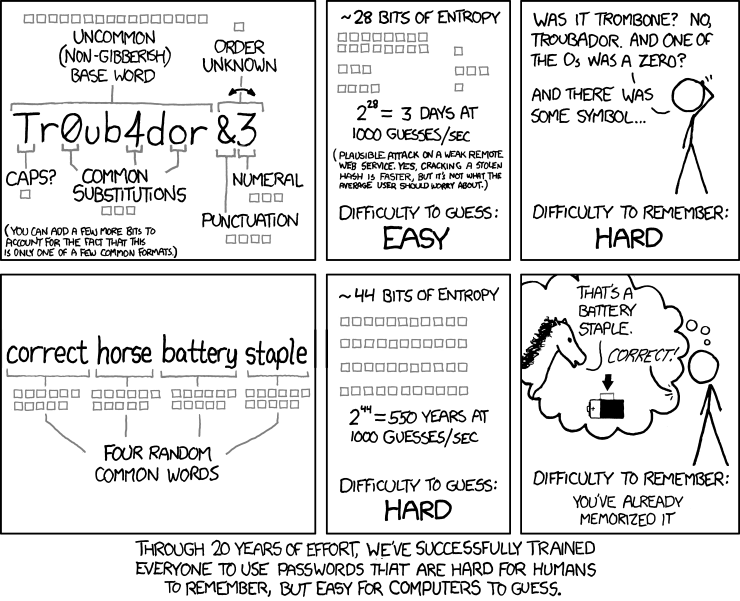
Bjoern Rennhak, the CTO of Orpiva, Skyped me an interesting cartoon, that mentioned about the security of passwords that contain just few words been stronger than those strong passwords generated. I didn't believe it, but the math sure does add up.
Here is a lib that you can use to generate passwords in your Ruby applications or a command line utility which you can use to generate passwords standalone.
While there are some more planned updates over the next few months, this is what I need for my new blog. Thus I will pause development for a while and go back to make my website/blog. If you do have any suggestions, I would be glad to hear. Make an issue and lets talk about it.
Installation
Developed in Linux/Ubuntu, this should work fine on Linux machines. I cannot say the same is true with Mac or Windows systems.
Add this line to your application's Gemfile:
gem 'xkpassword'
And then execute:
~# bundle
Or install it yourself as:
~# gem install xkpassword
Installing the gem also installs the xkpassword executable.
Usage
You can use this app as a Ruby gem in your application or as a command line utility. For a fuller guide to presets and examples, see doc/README.md.
Command Line
The command line app accepts the same generation options as XKPassword.generate.
If you installed the gem, use the executable directly. If you are working from a
checkout, run the executable through Bundler.
~# xkpassword
~# xkpassword --help
~# bundle exec exe/xkpassword
Global CLI config
The CLI reads optional defaults from ~/.xkpassword. The file uses YAML, so it can
include comments while you experiment with different settings. Use xkpassword --init
to create a commented starter file.
~# xkpassword --init
~# xkpassword
~# xkpassword --separator .
# ~/.xkpassword
# preset: wifi
words: 5
min_length: 4
max_length: 8
separator: "-"
# case_transform: capitalize
CLI flags always override values from ~/.xkpassword, so you can keep preferred defaults
in the file and still override them per command.
Ruby Apps
Use the library API inside your Ruby application:
require 'xkpassword'
= {
words: 5,
min_length: 5,
max_length: 8,
separator: '.',
case_transform: :capitalize,
}
XKPassword.generate()
You can still use presets when they fit your use case:
require 'xkpassword'

XKPassword.generate(preset: :security, separator: '.')
If you are generating multiple passwords at once, use a single generator instance so the dictionary only needs to be loaded once:
require 'xkpassword/generator'
= {
words: 4,
min_length: 4,
max_length: 6,
separator: '-',
case_transform: :downcase,
}
generator = XKPassword::Generator.new
generator.generate()
# 10.times { generator.generate(options) }
preset supports :xkcd (default), :web32, :wifi, :security, and :apple_id.
You can still override any individual option in the selected preset.
The default :xkcd preset keeps the gem's original behavior of generating 4 words.
case_transform supports :upcase, :downcase, and :capitalize, and applies the
selected transform to every generated word in the password.
The GEM
Releases are intended for functional updates such as new features and bug fixes. Check the Git tags or RubyGems release history for the latest published version.
Development
After checking out the repo, run bin/setup to install dependencies. You can also run
bin/console for an interactive prompt that will allow you to experiment.
To install this gem onto your local machine, run bundle exec rake install. To release
a new version, update the version number in version.rb, and then run bundle exec rake
release, which will create a git tag for the version, push git commits and tags, and push
the .gem file to rubygems.org.
Contributing
Bug reports and pull requests are welcome on GitHub at https://github.com/[USERNAME]/xkpassword. This project is intended to be a safe, welcoming space for collaboration, and contributors are expected to adhere to the Contributor Covenant code of conduct.
License
The gem is available as open source under the terms of the MIT License.